

 By MANZI
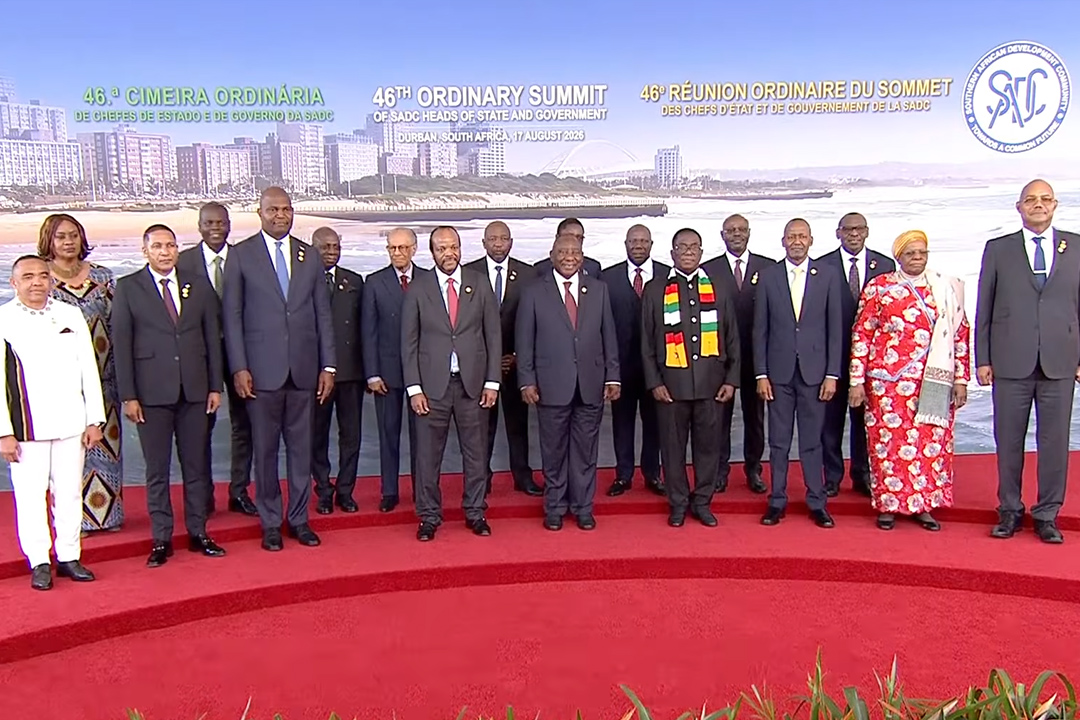
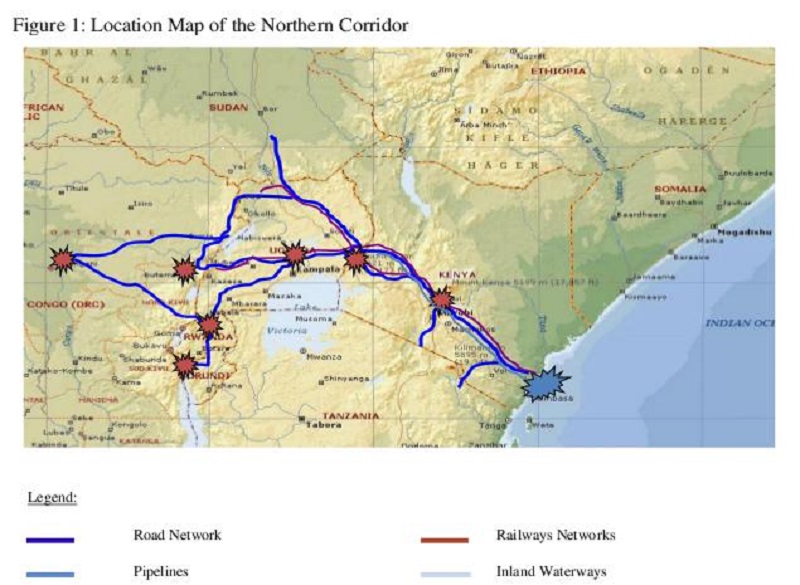
Africa’s institutional geography has therefore created multiple and sometimes competing regional memberships.
This raises a fundamental question: how far is a government prepared to subordinate its immediate national interests to a wider regional interest?
Regional organisations become powerful when their members accept that, under certain circumstances, collective interests must prevail over narrow national considerations.
That appears to be one of the SADC’s central weaknesses.
South Africa no longer carries the same regional weight
The history of the SADC cannot be separated from South Africa’s political and economic influence.
Following the end of apartheid, Pretoria enjoyed extraordinary diplomatic prestige. Under Nelson Mandela and subsequent administrations, South Africa had both the political authority and economic weight to exercise considerable influence across Southern Africa.
South Africa remains the region’s indispensable power. But it is also confronting significant domestic economic, social, energy, migration and budgetary pressures.
As a result, Pretoria is less able to carry the political, economic and security burden of an entire region on its shoulders.
The problem is that the SADC has not yet developed a sufficiently strong system of collective leadership to compensate for this relative decline in South Africa’s capacity to lead.
When the region’s dominant power hesitates or faces limitations of its own, the organisation itself appears hesitant.
Economic integration remains too shallow
Political weakness is also linked to insufficient economic integration.
The SADC has ambitious objectives. Its Regional Indicative Strategic Development Plan 2020–2030 calls for industrialisation, market integration and the creation of a more economically interconnected region.
But adopting regional strategies is not the same as creating genuine economic interdependence.
SADC economies remain largely organised around national markets and relationships with economic partners outside the region. As long as member states trade and invest according to predominantly national or extra-regional priorities, political integration will remain fragile.
Economic integration matters because it creates common interests. The more interconnected national economies become, the greater the political cost of undermining regional institutions.
The real Achilles’ heel: implementation
Another major weakness is what could be described as the SADC’s implementation deficit.
The organisation does not lack summits, declarations, protocols or strategic plans. The real difficulty begins after decisions have been adopted.
Who finances them? Who implements them? Within what timeframe? What happens when a government fails to honour its commitments? And, ultimately, who has the authority to impose consequences?
An institution that repeatedly takes decisions without possessing adequate mechanisms to guarantee their implementation gradually loses authority and credibility.
The history of the SADC Tribunal provides a revealing example.
The Tribunal was established to help interpret and enforce regional law. Yet after issuing politically sensitive rulings involving Zimbabwe, its operations were suspended.
The precedent sent a troubling message: if a regional institution can effectively be neutralised when its decisions become politically inconvenient for governments, its independent authority will inevitably remain limited.
The SADC consequently remains primarily an organisation of states rather than a regional community exercising authority above those states.
Regional problems, national responses
The institutional weakness of the SADC has become even more problematic because the nature of threats facing Southern Africa has changed dramatically.
The region must now confront armed groups operating across borders, terrorism, population displacement, trafficking networks, migration pressures, electoral tensions, climate-related disasters, economic and energy crises, and intensifying international competition over strategic minerals.
These problems increasingly cross national borders.
Yet responses remain largely national.
This may be the central paradox confronting the SADC today: the region’s problems have become regional much faster than the institutions designed to solve them.
“Almost powerless” does not mean useless
Al Kitenge’s diagnosis nevertheless requires an important qualification.
The SADC has not become irrelevant. It continues to perform important functions in political coordination, election observation, economic cooperation, infrastructure development, trade, energy, health, security and regional diplomacy.
The real question is therefore not whether the SADC still serves a purpose.
It is whether the instruments at its disposal remain adequate for the scale and complexity of the crises it is expected to address.
The power of a regional organisation cannot ultimately be measured by the number of summits it holds or communiqués it issues.
It must be measured by its ability to transform collective decisions into realities on the ground.
The SADC faces a historic choice
The organisation now stands at a crossroads.
It can remain essentially an intergovernmental structure in which leaders consult one another, adopt common positions and then implement those decisions according to their respective national interests.
If it chooses that path, its geopolitical influence will remain limited.
Alternatively, it can move towards a more demanding form of integration: stronger regional institutions, autonomous financing mechanisms, genuinely binding obligations, improved military and diplomatic coordination, regional value chains and substantially increased trade among member states.
This is where Al Kitenge’s diagnosis goes beyond the SADC itself and raises a much broader question about the future of African regional integration:
Can Africa build powerful regional communities when states want to enjoy the benefits of regional solidarity while retaining complete sovereignty whenever collective decisions become politically inconvenient?
The SADC is not condemned to powerlessness.
But to regain its influence, it may have to evolve from a community of cooperation into a genuine community of regional power — one capable not only of deciding together, but also of acting together and collectively assuming the consequences of those decisions.
Only then can the SADC hope to recover the geopolitical influence that Southern Africa once expected it to exercise.
Subscribe to view notification of our daily news
RwandaPodium © All Rights Reserved. Powered by nozatech.com