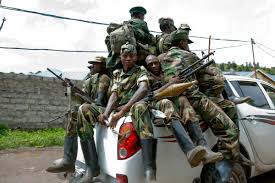
According to France 24, in February “Kinshasa’s forces launched attacks on several fronts against AFC/M23 rebels in eastern Democratic Republic of Congo on Wednesday, with drones striking the armed group near a strategic mining site,” citing local and security sources speaking to Agence France-Presse. The deployment of drones marked a significant escalation in the conflict, signalling Kinshasa’s readiness to employ increasingly sophisticated asymmetric force in an effort to reclaim territory long dominated by insurgent factions.
Last year, M23 fighters entered Uvira, a strategically vital city in South Kivu province — an advance that cast a dark and destabilizing shadow over the US-brokered peace agreement between the DRC and Rwanda. That accord, already fragile and repeatedly strained, now faces renewed collapse as Kinshasa attempts to reverse rebel momentum through direct military pressure. The central question remains how the United States will respond to Congolese operations against forces Washington itself previously acknowledged were supported by Rwanda, particularly within a ceasefire framework that has repeatedly fractured under the weight of mistrust and competing strategic interests.
Marco Rubio was unequivocal last year, condemning the M23 advance as a “clear violation” of the peace agreement — a statement that underscored Washington’s mounting frustration with Kigali’s persistent denials. Yet the dynamics of the conflict have since shifted. This time, it is Kinshasa seeking to regain the initiative and reassert control over strategically vital territory in eastern Congo.
That shift became especially evident around the mining town of Rubaya, where drone strikes — conducted using Chinese and Turkish systems — targeted AFC and M23 positions. Rubaya’s coltan mine holds immense global significance, supplying an estimated 15–30% of one of the world’s most critical minerals used in mobile phones, laptops, semiconductors, and advanced electronics. Control over Rubaya is therefore not merely a localized military objective; it carries profound international economic implications, ensuring that instability in eastern Congo reverberates far beyond the African continent.
French President Emmanuel Macron stated that “France fully supports mediation efforts for a lasting political solution in the Great Lakes region, the cessation of hostilities, a ceasefire, and respect for the authority of the state and the territorial integrity of the DRC.”
Yet Macron is fully aware that such diplomatic language is implicitly weighted against Rwanda and the M23, while simultaneously glossing over Kigali’s long-standing security anxieties rooted in the traumatic legacy of regional conflict and genocide.
As Associated Press reports, the conflict remains deeply entangled in a decades-long ethnic and geopolitical struggle. M23 claims it is defending Congolese Tutsis, while Rwanda insists these communities face persecution from Hutu militias, including factions linked to perpetrators of the 1994 genocide in Rwanda. Kigali further alleges that the Democratic Forces for the Liberation of Rwanda (FDLR) have become “fully integrated” into the Congolese military establishment — an accusation firmly rejected by Kinshasa.
Meanwhile, the DRC’s military capabilities continue to expand through drone technology supplied or supported by Turkey — a NATO member — alongside China. Yet Rwanda’s armed forces remain highly disciplined and formidable by regional standards, ensuring that any serious military miscalculation could rapidly spiral into a far wider regional confrontation.
If peace initiatives are to possess any genuine credibility, regional actors and the broader international community must engage Rwanda directly and seriously — acknowledging its historical trauma and deeply rooted security concerns rather than dismissing them for diplomatic convenience. Without such realism, ceasefires will continue to shatter, mediation efforts will remain performative, and the civilians of eastern Congo will once again bear the terrible human cost.
Wars continue to scar vast regions of Africa — from Mali in the Sahel to northern Mozambique — underscoring a grim and recurring truth: unresolved grievances, selective diplomacy, and strategic denial remain among the deadliest forces shaping the modern world.


 By MANZI