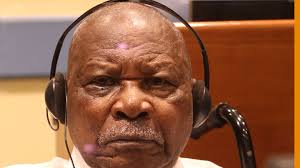
Félicien Kabuga died on Saturday in custody in The Hague.
Félicien Kabuga, one of the masterminds of the 1994 genocide in Rwanda that left over almost a million Tutsi murdered, died on Saturday in custody in The Hague. He had been there since being arrested in 2020 near Paris after evading justice for over a quarter of a century, and by the time he was taken into custody in his late 80s he was so old that he was deemed unfit to stand trial for reasons of dementia. He deferred justice for long enough that it was never able to be served to him, even though he was one of the chief financiers and planners of one of the darkest crimes in human history.
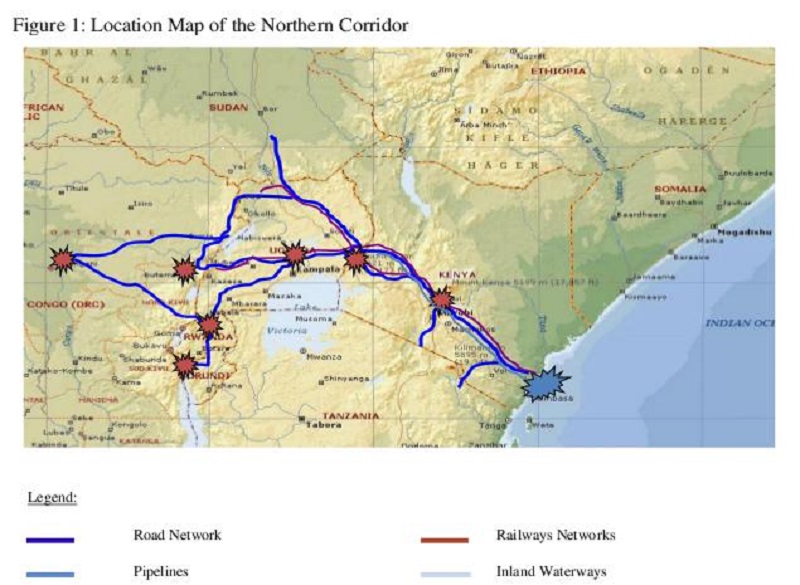
When Kabuga was finally arrested, authorities reportedly found passports and identity documents from multiple countries in his name, a testimony to the international complicity that allowed one of the world’s most wanted fugitives to disappear in plain sight for so many years. He had apparently lived, over the years, in Kenya and France, operating with relative freedom and allegedly enabled by his family, his network of Hutu extremists, and his vast personal wealth.
At The Hague, the International Residual Mechanism for Criminal Tribunals (IRMCT), the body set up to handle unfinished cases from the genocide of the Tutsi and the wars in the former Yugoslavia, charged Kabuga with seven counts related to the genocide. Prosecutors alleged Kabuga, a prominent and wealthy Rwandan businessman, was a principal financier of the extremist militias that carried out the genocide. They accused him of using his position as a founder of Radio Télévision Libre des Mille Collines (RTLM) to incite violence and mass participation in the genocide by broadcasting anti-Tutsi propaganda, describing the Tutsi as “cockroaches.” He was also accused of financing importation and distribution of machetes used during the killings.
I was serving as the UN Under-Secretary-General and Special Adviser on the Prevention of Genocide at the time Kabuga’s trial began, and I welcomed what seemed like his inevitable conviction. His capture felt like a modern Nuremberg moment, a trial through which the world would finally learn, in forensic detail, how genocide is planned, financed, organized, and executed. It also would have set the conditions for bringing the remaining fugitive perpetrators of the genocide against the Tutsi to face justice.
Yet it was not to be. As the world stood on the edge of what could have become one of the most important criminal trials in 80 years, Kabuga was declared unfit to stand trial due to dementia. He escaped judgment not through innocence but through sheer time, bought by powerful networks that helped him evade capture. A trial would not merely have judged Kabuga. It would have exposed the governments and people who enabled him, shielded him, moved him across borders, and benefited from his silence.
Criminal trials are not only instruments for determining guilt, but for holding offenders accountable for their actions. They are also institutions of memory and learning.
Kabuga escaped judgment not through innocence but through sheer time.
The Nuremberg trials did not simply convict Nazi leaders; they created the documentary foundation through which the Holocaust is understood to this day. Without them, Holocaust inversion, denial, revisionism, and distortion would have flourished unchecked. The trial of Adolf Eichmann in Jerusalem forced the world to confront survivor testimony. The International Criminal Tribunals for the former Yugoslavia and Rwanda documented the mechanics of genocide. The Extraordinary Chambers in the Courts of Cambodia preserved testimony about the atrocities of the Khmer Rouge against historical amnesia.
Trials matter because they preserve truth and force societies to look directly at what human beings can do to other human beings. Kabuga’s trial could have done the same, because the genocide against the Tutsi was not spontaneous madness. It was meticulously planned, financed, and executed.
Among the most chilling charges against Kabuga was that he imported approximately 500,000 machetes into Rwanda as tools for extermination. These were the weapons with which, as the French academic and expert on genocides Gérard Prunier observed, “killing in Rwanda reached a tempo of horror: approximately 333 murders per hour, five and a half lives extinguished per minute.”
Among the most chilling charges against Kabuga was that he imported approximately 500,000 machetes into Rwanda as tools for extermination. (Scott Peterson/Liaison via Getty Images)
Kabuga may now be dead, but I will remember what I learned about the crimes he was responsible for inciting and organizing for as long as I live. As a young researcher in the early 2000s, I had heard perpetrators describe to me the killings as “exhausting work,” offering excruciating details of how long it took victims to die from machete wounds. When the Tutsi fled into Catholic churches at Nyamata and Ntarama, seeking sanctuary as they had in earlier cycles of violence, killers followed them with machetes, clubs, and grenades and finished them off. At Nyamata, about 10,000 people were murdered; at Ntarama, around 5,000 were killed.
Kabuga’s long-successful effort to evade capture after the genocide itself ended also appears to have cost lives. In Kenya, Kabuga’s name was spoken in whispers, and people in Nairobi crossed the road rather than walk past buildings said to be connected to him. One journalist who allegedly assisted efforts to locate Kabuga in the country, William Munuhe, was found murdered in 2003. “We do suspect the murder of Mr. Munuhe is linked to Kabuga’s efforts to evade capture,” an American embassy official told The Guardian. The United States Department of State offered a reward of up to $5 million for information leading to Kabuga’s arrest and conviction.
Now that Kabuga has died before facing justice, we have an obligation to ensure he is not remembered as merely an old man who died, but as one of the indicted principal architects and financiers of a genocide. For historians, survivors, and future generations, the uncomfortable question is this: Did those who protected Félicien Kabuga for decades only allow him to be found when they knew he could no longer speak?



 By MANZI